

Canvas Bag Finishes: Understanding Paraffin, Wax and Water Repellency
One canvas looks crisp; another has calm, varied tones. Have you ever wondered about the difference while looking at bag photographs?
Alongside fabric thickness and weave, surface treatments change the impression. Understanding words such as paraffin, wax and water-repellent makes it easier to connect the texture you enjoy with the way you want to use a bag.
Canvas is first of all a name for a fabric
Canvas is a term for a heavy woven fabric. Fibre, thickness and weave change its feel and weight, so not all canvas has the same stiffness or care needs.
Dyeing and treatments then contribute to the bag's appearance. Do you prefer soft fabric or a firmer, more practical feel? Look for those differences in photographs.

Paraffin and wax can change its feel
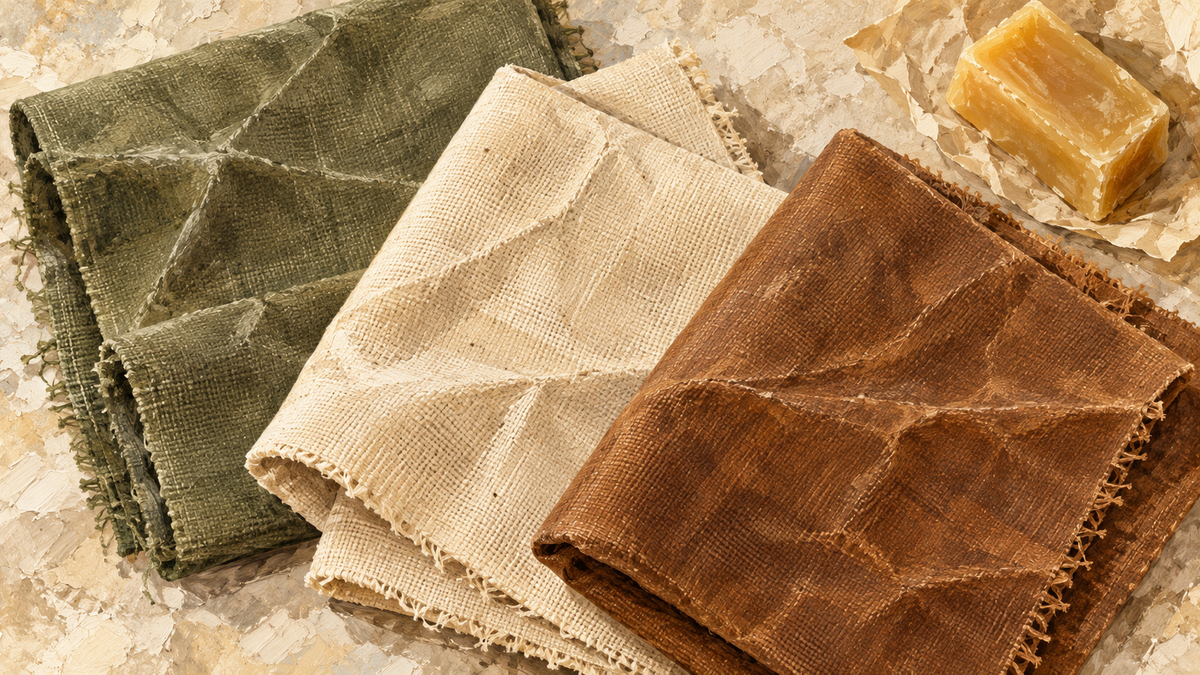
Paraffin is a type of wax. Applying such treatments to canvas can help it repel water and give it firmness or distinctive variations in tone.
Treated fabric may show lines or colour differences where it folds or rubs. If you enjoy character added through use rather than a uniform new surface, it can be a rewarding option.
Water repellency describes the surface; consider the whole bag for rain protection
Water repellency is the ability of a surface to shed water. Even if the fabric does that, water can enter through seams or openings. The bag's construction also matters when considering how it handles rain.
Labels such as 'wax-treated' or 'waterproof canvas' alone don't guarantee a bag can spend a long time in heavy rain. Prepare for your outing, perhaps by protecting important contents in a separate bag.
Before using a waterproofing spray, check whether it suits the finish and leather sections. Water protection and prevention of colour transfer aren't the same thing.

Choose a canvas-and-leather bag by shape
Will you gather belongings for travel or carry daily essentials on your back? Once you know about the material treatment, compare shapes that fit how you move.
A canvas holdall with relaxed fabric and leather character

A holdall measuring approximately 53 × 23 × 30 cm and weighing around 1.1 kg, combining canvas with crazy horse leather. For packing weekend clothes and heading away in your usual outfits. It's a shape for enjoying the textures of fabric and leather together.
A canvas backpack for walks around town

A backpack measuring approximately 30 × 11 × 42 cm and weighing around 0.8 kg. For those who'd like canvas and leather in a shape worn on the back. Prepare for rain with the opening in mind, and dry the straps and back panel as well when you get home.
Care for fabric and leather as separate materials
Leather handles or trim add appeal to a canvas bag through the combination of materials. That also means it may not be washable in the same way as a plain fabric bag.
Remove dust, blot moisture when wet and dry in the shade without heat. Follow the appropriate guidance separately for leather sections needing cream and fabric sections with wax-care instructions.
Clean with the finish in mind
Even if dirt bothers you, avoid trying to remove it all at once with detergent or a stiff brush. Washing can alter the texture and water-repellent finish of treated fabric.
Begin with removing dry dust, then use a method recommended for the product if dirt remains. Only reapply wax when you know the suitable product and method.
Questions about finish terminology
Are paraffin and wax completely different treatments?
Paraffin is a type of wax. Rather than treating the names as opposites, look at the particular product's finish and handling guidance.
Can I wax ordinary canvas myself?
It may change the colour and feel, or affect leather and lining. If you don't know whether the product is suitable, ask the retailer instead of treating it on your own judgement.
Understanding a surface treatment doesn't need to make choosing complicated. Use it as a way to find the firmness or tones you love, then enjoy living with that texture.
About the author

Yama (Cowmono Owner)
With experience in sales and marketing at apparel companies in Japan and abroad, Yama selects and introduces leather goods that fit naturally into everyday life.
