

A Simple Leather Oiling Routine: A Little Care, One Step at a Time
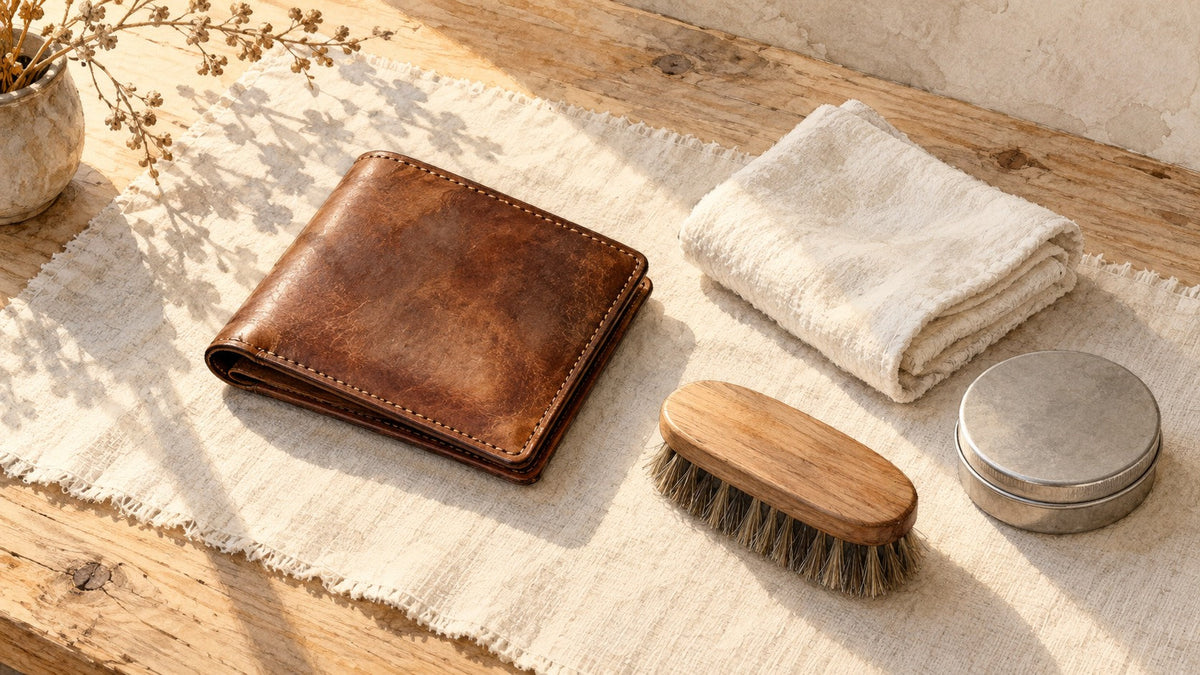
On a day off, empty your bag and set out a soft cloth. Leather care can be a moment to pay attention to the everyday tools that keep up with your busy life.
More oil isn't necessarily better. The basics are choosing a suitable product, applying it thinly and checking the result. Let's move through the process from preparation to putting things away, with a first-time user in mind.
Before you begin, match the product to the leather
Read both the item's care guidance and the product's suitable-material list. Treatments vary with finishes such as napped leather, patent leather and cordovan, not just names such as cowhide or horsehide. Avoid applying a genuine-leather oil routine directly to PU leather.
Pale colour or a lack of sheen doesn't automatically mean oil is needed. If a dry wipe leaves it in good condition, simply removing the dust is perfectly worthwhile care for that day.
Empty the contents and remove dust
Empty the bag or wallet and protect your work surface with a cloth. Use a soft, dry cloth or brush to remove dust, gently tending to seams and the areas around fittings, too.
If it has just been caught in the rain, let it dry thoroughly without heat before applying oil. If you find a torn handle or loose stitching, don't try to disguise it with treatment. Leave the area as it is so you can ask about repair.

Test a small amount in a hidden area
Following the care product's instructions, begin in a hidden place such as the edge of the base. Don't pour on a generous amount directly; use the recommended method with very little. Check the colour and sheen after it has settled, as well as immediately after application.
If the leather becomes darker than expected, sticky or noticeably altered, stop rather than treating the whole surface. With leather you love for its varied tones or matte feel, consider whether you'd prefer to preserve its current character.
Spread a thin layer without leaving excess
If the test area looks suitable, spread a thin layer using the product's stated amount and method. Even if it seems too little, working in small areas and observing the result is easier than adding several coats at once.
Follow the instructions for settling time and any final wiping. Don't let the leather touch clothes or other leather goods while excess product remains. There is no need to keep rubbing forcefully when polishing.
Check the result before putting it away
After the specified time, check for uneven colour, stickiness and changes in feel. A photograph taken before care can help you compare. If excess remains on the surface, don't begin using it yet; follow the product guidance on what to do.
Oil won't restore deep cuts or tears. If damage remains or strong stickiness concerns you, ask for advice before adding more.

A wallet and shoulder bag for everyday care
Tend to it, then use it again. If you enjoy that rhythm, start with a shape that has a place in your daily life. Here are a wallet to appreciate close up and a bag to take out with you.
A long wallet for enjoying leather close at hand

A cowhide long wallet measuring approximately 20 × 11 × 3.5 cm and weighing around 0.3 kg. Card slots and a zipped pocket help keep belongings organised. Because you handle it daily, the surface sheen and scuffed corners naturally come to your attention.
A leather shoulder bag with separate places for small items

A cowhide bag measuring approximately 26.5 × 22 × 9 cm and weighing around 0.8 kg. Its main compartment has a zip, with small-item pockets and dividers inside. For those who value leather texture alongside weight. A quick dusting after getting home leaves it ready for another outing.
Questions about oiling leather
How much should I apply?
The right amount varies with the leather and product. Start small, using the product's instructions as your guide. Don't repeatedly layer it on just to create shine; check the condition once it has settled.
Will oil repair cracking?
It can't repair deep cracks or tears. For handles, shoulder straps and other load-bearing parts in particular, ask about repair before trying to improve the surface.
When you're finished, put the tools away and give the leather a little rest. Taking the necessary steps gradually helps make caring for a favourite something you can keep enjoying.
About the author

Yama (Cowmono Owner)
With experience in sales and marketing at apparel companies in Japan and abroad, Yama selects and introduces leather goods that fit naturally into everyday life.
