

What Is Mink Oil? Understanding Its Role and Suitability Before Caring for Leather
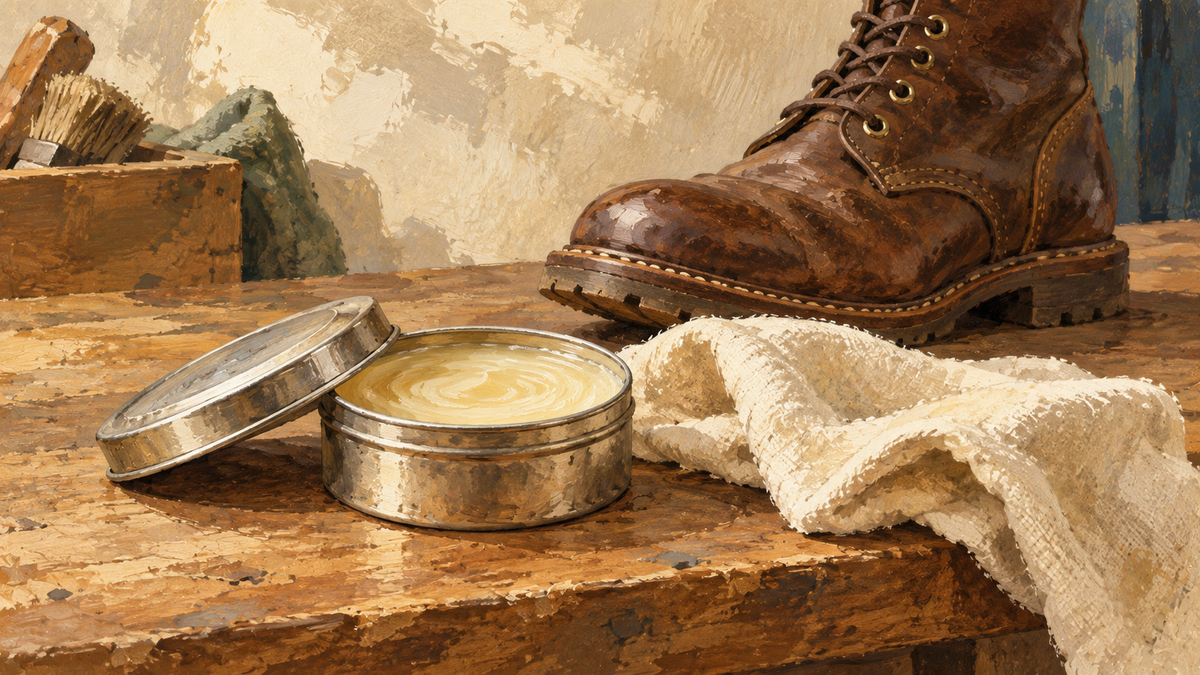
Once you start exploring leather care, mink oil is a name you see often. A tin beside a pair of boots may have a practical appeal of its own.
But not every treatment belongs on every leather you love. To respect its current colour and feel, let's look at what mink oil does and what to know before using it.
Mink oil is a product for adding oil to suitable leather
Mink oil leather-care products use fat derived from mink. Products sold in shops may also contain other oils, fats or waxes, so ingredients and instructions vary.
They are used to condition the flexibility or feel of suitable leather, but aren't a cure-all that makes everything last longer. Whether a treatment suits the leather's condition now is the starting point.
The colour and sheen you like may change
Adding oil may darken leather or change its sheen and feel. If you enjoy a pale colour or matte appearance, consider that possible change before using it.
General oil care may not suit napped materials such as suede, patent leather or specialised finishes. Read both sets of guidance, then test only a suitable product in a hidden spot with a small amount.
Read Columbus's guidance on materials suitable for mink oil

Start crazy horse leather care with dry wiping, too
Crazy horse leather can be enjoyed for moving tones and scuffed marks. A slightly pale area doesn't automatically mean it lacks oil.
Start by removing dust with a soft, dry cloth and getting to know its feel. Even oil- or wax-treated finishes vary between products. If you're unsure whether more care is needed, ask the retailer with a photograph.

Let condition guide amount and frequency, rather than the calendar
Instead of adding oil every week or month by rule, follow the material guidance and actual condition. A generous application may leave excess oil, stickiness or a colour change you don't enjoy.
Oil won't join deep cracks or tears. When you notice damage, identify the condition before applying anything so you can choose care or repair appropriately.
For bags and belts against clothing, care continues after application
Straps, handles and belts stay against clothing for long periods. Don't leave excess product behind, and wait for the time specified before use.
Oiling doesn't guarantee protection against colour transfer. On rainy days or with pale outfits, also consider moisture and friction.

Two everyday pieces whose leather you'll want to notice
A backpack and a pouch for personal essentials differ in size, but both offer leather character through use. Choose care products suited to each one's finish.
A cowhide backpack for everyday belongings

A backpack measuring approximately 42 × 32 × 18 cm and weighing around 1.3 kg, with laptop storage and small-item pockets. For bringing a broad leather surface into everyday outfits. Compare your device's dimensions including its case with the compartment.
A leather pouch with a place for travel essentials

A cowhide pouch measuring approximately 23 × 16 × 8.5 cm and weighing around 0.4 kg. It has a double-zip opening, an inner zipped mesh pocket and an outer zipped pocket. A handle helps you carry small essentials together while travelling.
Common questions about mink oil
Will mink oil make it waterproof?
It is a treatment for suitable leather, not a way to make a bag's openings and seams fully waterproof. After rain, blot moisture and dry without heat as well.
Should I apply it straight away to new leather?
Not necessarily. First read the care guidance provided and enjoy the colour and feel as the product arrives.
The pleasure of care lies in noticing a favourite leather's changes, more than in using lots of treatments. Touch it, look at it and find a way of living with that individual piece.
About the author

Yama (Cowmono Owner)
Yama has worked in sales and marketing at apparel companies in Japan and abroad, with a broad interest in fashion, sport, outdoor pursuits and subcultures.
