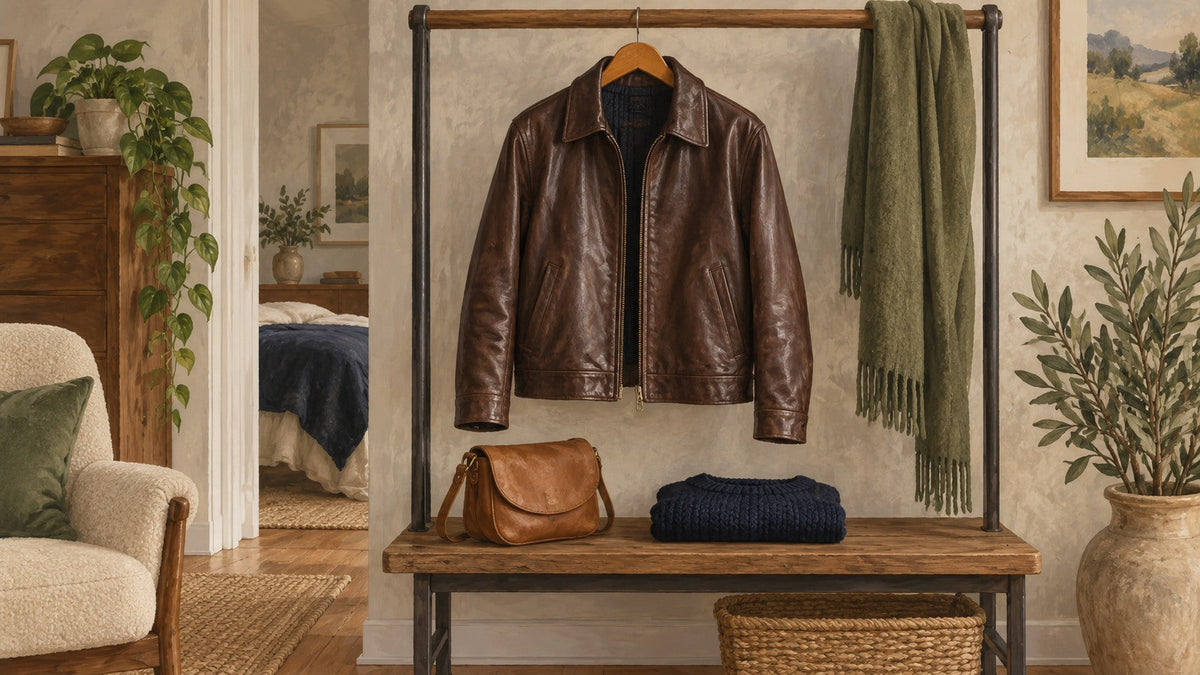
A thorough explanation of how to care for your leather jacket: A maintenance guide to make it last longer


More than just a fashion item, a leather jacket is a cultural icon, and if properly cared for, it can become a valuable piece of clothing that can be passed down from generation to generation. This article provides comprehensive information for leather jacket enthusiasts and novices alike, from their rich historical background to their diverse styles to how to properly care for each type of leather. It covers everything you need to know about leather jackets, including the characteristics of each type of leather jacket, proper care techniques, seasonal storage methods, and how to enjoy the attractive aging of leather jackets over many years of wear.

1. History and cultural background of leather jackets

Leather jackets are more than just fashion items; they are iconic pieces with a deep history and cultural significance spanning over 100 years. Let's weave the path of evolution from its origins to the present day.

1910s~

Birth of practical winter clothing

Introducing the "Flieger jacket" used by German military squadrons during World War I. It was developed for the practical purpose of protecting you from the cold air at high altitudes. It features a design that emphasizes durability and wind resistance.

1928

The first civilian leather jacket

Irving Schott releases the world's first zippered leather jacket, ``Perfect.'' This became the prototype of the modern double rider jacket. It was sold through Harley-Davidson and became popular among bikers.

1940s

Wartime developments

Military flight jackets such as A-2, G-1, and B-3 were widely used during World War II, and their functionality and durability improved dramatically. Used by US military pilots, it also gained high popularity in the post-war civilian market.

1953

Becoming a symbol of counterculture

Marlon Brando wore the Schott One Star in the movie The Wild One, establishing the leather jacket as a symbol of rebellion. This movie transformed the leather jacket from a mere utilitarian item to a cultural icon.

1955

Birth of a youth culture icon

James Dean wears a red leather jacket in the movie "Rebel Without a Cause." It became a symbol of youth's rebellious spirit and freedom, cementing the cultural status of the leather jacket. This was an opportunity for leather jackets to become widely recognized as a fashion item.

1970s-80s

The rise of the punk movement

Foreign bands such as the Ramones and Japanese band members wear leather jackets. Features DIY style studs and paint. Hiroto Komoto (THE BLUE HEARTS),GUITAR WOLF's Seiji et al.has become a symbol in Japan.

1980s

Established in pop culture

Michael Jackson's red leather jacket in his ``Thriller'' music video, and Eikichi Yazawa's black leather jacket style became all the rage in Japan. Metal bands also loved leather jackets, and the influence of leather jackets expanded in both the music scene and fashion.

1990s

into the mainstream of fashion

Leather jackets became mainstream fashion due to the influence of movies such as the coat in ``The Matrix'' and the red leather jacket in ``Fight Club.'' Luxury brands have introduced innovative designs and established themselves in the fashion industry.

2000s~

Reinterpretation in modern fashion

A reinterpretation of the leather jacket by high fashion brands such as Saint Laurent and Balenciaga. The value of vintage leather jackets is being reevaluated from a sustainable perspective, and new life is being breathed into the modern fashion scene.

Origin and evolution of leather jackets

The history of leather jackets dates back to the early 1900s. It was originally designed for practical purposes, especially for airline pilots and military personnel. The "Flieger jacket" used by German military squadrons during World War I, and the A-1 flight jacket (introduced in 1927) and its successor A-2 (1931), introduced by the U.S. military in 1927, are the prototypes of modern leather jackets. Later, a cycle jacket called "Perfect" developed by Irving Schott in 1928 became the basis for today's double rider jacket. The leather jackets of those days werecrazy horse leatherLike a product, it was designed to improve its texture the more you use it.

1-1. Leather jacket as a cultural icon

In the 1950s and 1960s, the leather jacket became a symbol of rebellion and youth culture. Movie stars in particular had a huge influence.

Popularization of leather jackets through movies

Marlon Brando's Schott One Star in The Wild One (1953) established the iconic image of the leather jacket. James Dean's red leather jacket in Rebel Without a Cause (1955) also had a huge impact on youth culture.

Additionally, Steve McQueen's Barracuta G4 in The Great Escape (1963) and Arnold Schwarzenegger's leather jacket in The Terminator (1984) helped position the leather jacket as a cool and stylish item. These movies helped spread the rebellious spirit and coolness of leather jackets around the world.

Leather jacket icon in the music scene

From the 1970s onwards, leather jackets became a trademark of rock musicians, especially closely associated with the punk movement. Overseas, the Ramones and Sex Pistols wear leather jackets, and in Japan, THE BLUE HEARTS, centered on Hiroto Komoto,GUITAR WOLF's SageThe leather jacket was used as a symbol of rebellious spirit.

Especially in Japan's punk scene, leather jackets were considered important as an item that embodies the pursuit of ``authenticity.'' In addition, Eikichi Yazawa's iconic black leather jacket style established the important position of leather jackets in the Japanese music scene and influenced many musicians and fans.

crossbody bagThe style of combining leather items such as leather jackets with leather jackets was also established by rock musicians.

1-2. Subculture and leather jackets

Leather jackets have had different meanings in various subcultures and have developed in their own way.

  • biker culture:Started with the Holocaust Motorcycle Club in the 1940s and evolved into the Hells Angels (1950s-). Leather jackets in biker culture served as a symbol of practicality and anti-establishment. highly durablecrazy horse leatherThe leather jackets are especially loved by bikers. When movingtravel bagThe standard style was a combination of
  • punk rock movement:Leather jackets became a symbol of anti-establishment in the New York punk scene centered around CBGB in the 1970s, and in Japan with THE BLUE HEARTS in the 1980s. A culture of expressing individuality through DIY studs, paint, and patches developed. Accessories are also considered important as elements that express one's individuality,leather accessoriesThere was also a tendency to focus on
  • Japanese leather jacket culture: In Japan, the motorcycle gang culture of the 1970s and 1980s created a unique leather jacket style, which was later reinterpreted by luxury fashion brands. In the late 1980s, leather jackets were introduced as part of the "Shibu Kaji" style.rucksackAn urban style was developed in combination with

1-3. Leather jackets in modern fashion

In modern times, leather jackets have established themselves as a fashion item that is accepted by a wide range of people.

  • Reinterpreted in high fashion: Luxury brands such as Saint Laurent and Balenciaga unveiled leather jackets on the runway, raising their status as sophisticated items. Modern leather jackets with elaborate silhouettes and details are attracting attention.
  • Various styles available: A variety of designs are available, from traditional biker styles to minimal designs and oversized models, and are compatible with a variety of fashion styles.business bagSmart casual wear paired with this is also popular.
  • Genderless:Leather jackets were once considered a masculine item, but now they areSophisticated design for womenIt has been established as a genderless fashion item.
  • Sustainability-oriented: With the rise of environmental awareness, the value of vintage leather jackets is being reevaluated, and the value of vintage leather jackets is being reevaluated.maintenance suppliesetc. are also attracting attention. Also,PU leatherThe popularity of leather jackets made from alternative materials is also increasing.

Cultural value of leather jackets

A leather jacket is more than just winter clothing; it is an important item that expresses the wearer's identity and the culture to which he or she belongs. Many leather jacket enthusiasts are fascinated by the fact that a leather jacket changes over time along with its owner, creating a unique story.crazy horse leatherMaterials that can be enjoyed as they change over time, such as , enrich the process of creating a story. Matched with leather jacket stylemini shoulder bagLet's complete your unique coordination.

2. Types and characteristics of leather jackets

Leather jackets come in many different styles, each with its own design, history, and purpose. Let's take a look at the basic types and characteristics to find the leather jacket that suits your style and needs.

2-1. Classic leather jacket style

style Features origin modern dressing Recommended bags
double riders Asymmetric zipper, sleeve and waist belts, snap collar, epaulettes 1928, Schott "Perfect" model Casual with a T-shirt or denim, mature with a shirt mini shoulder/backpack
single riders Simple central zipper, minimal details, slim silhouette Popular in the 1950s and 1960s Can be worn all season, also for business casual business bag
cafe racer Minimal design, simple round collar, fitted silhouette, band collar 1960s British cafe racer culture Modern style with a slim silhouette cross body
A-2 flight jacket Simple collar, front zipper, knit cuffs and waist, shoulder epaulets For the U.S. Army Air Corps (1931-) From casual to business casual travel bag
G-1 flight jacket Shearling collar, front zipper, handwarmer pockets For the US Navy (1947-) Perfect for casual occasions rucksack
B-3 Bomber Jacket Large shearling collar, wide silhouette, sheepskin lining For high-altitude bomber crews during World War II Ideal for protection from the cold during the cold season canvas bag

2-2. Leather jacket style with military origins

A-2 flight jacket

Features: Simple collar, front zipper, knitted cuffs and waist, shoulder epaulets

history: Developed in 1931 for the US Army Air Corps and widely used during World War II. Initially, they were made from horsehide, but later goatskin was also used.

How to dress: Suitable for a wide range of occasions, from casual to business casual.travel bagIt is also perfect for a travel style combined with. Paired with slacks, it can also be worn as business casual.

G-1 flight jacket

Features: Shearling collar, front zipper, pocket and chest flap

history: It was developed for US Navy pilots and became widely known to the general public through the movie ``Top Gun.'' Compared to the A-2, it has a shearling collar and additional handwarmer pockets, making it optimized for harsher environments.

How to dress:Perfect for casual occasions,rucksackCombine with this for an active impression. It goes particularly well with jeans or chinos, making it perfect for casual weekend style.

B-3 Bomber Jacket

Features:Large shearling collar, wide silhouette, sheepskin lining

history: Developed for cold protection during high-altitude flights during World War II. Designed for use by unarmed high-altitude bomber crews, it is designed to protect them in extreme cold temperatures of -50 degrees Celsius.

How to dress: Excellent protection against the cold during the cold season.canvas bagPair it with an outdoor style. Since it has a voluminous feel, the trick is to balance it out with slim pants underneath.

leather trench coat

Features: Knee length, with belt, wide collar, with epaulettes

history: Developed as a leather version of the traditional trench coat, it became an iconic style, especially in the movie Blade Runner. It became especially popular in the late 1980s and early 1990s.

How to dress:Can be worn even in formal occasions,business bagExcellent compatibility with. Pair it with a dress shirt, slacks, or jacket to complete a sophisticated adult style.

2-3. Contemporary leather jacket style

Today, in addition to traditional styles, leather jackets with new interpretations and designs are also gaining popularity.

  • leather blouson: Lightweight and casual design, featuring a variety of collar variations such as stand collar and shirt collar. Ideal for everyday use,mini shoulder bagIt also goes well with.crazy horse leatherYou can enjoy the change of the made blouson over time.
  • leather shirt jacket: The design is somewhere between a shirt and a jacket, and it is lightweight and comfortable to wear. Suitable for everything from casual to business casual,tote bagWe recommend styling it with the following.Made of genuine leatherThe sense of quality andMade of PU leatherYou can choose from the ease of use.
  • leather hoodie: A hooded leather jacket with a design that combines casualness with the luxury of leather.waist pouchThe active styling of this combination is popular.canvas materialThe combination is modern.
  • leather bomber jacket: A design that reinterprets military jackets such as MA-1 using leather material. Gives a casual and urban impression,backpackExcellent compatibility with. It features a practical design with excellent windproofness and heat retention.

2-4. Leather jacket style for women

Nowadays, there are a wide variety of leather jackets designed for women. There are a wide variety of silhouettes and colors that fit the body, making them useful in a variety of situations.

cropped leather jacket

  • Short length emphasizes the waist silhouette
  • Features a feminine design
  • mini bags for womenExcellent compatibility with
  • Enhance your style by pairing it with high-waisted bottoms
  • Attractive combination with skirts and dresses

ladies riders

  • Reinterpretation of traditional riders into a feminine silhouette
  • Wide variety of colors
  • shoulder bagThe standard combination with
  • Contrast styles that match dresses are also popular.
  • Attractive mixed style with feminine items

leather peplum jacket

  • Peplum (frilled hem) at waist
  • Design that emphasizes femininity
  • leather toteElegant styling combined with
  • Can also be used for office casual wear
  • Particularly good with skirts

leather bolero

  • Short length to be worn over a dress or dress
  • Perfect for special events and parties
  • clutch bagLook elegant with
  • softMade of genuine leatheris comfortable to wear
  • Versatile item that can be used in formal occasions

Points to consider when choosing a leather jacket

When choosing a leather jacket, it is important to choose one that suits your fashion style, body type, and occasion. For example, if you have a slender figure, we recommend a cafe racer style that fits you well, a simple single rider for those who want to use it in a wide range of situations, and a double rider for those who want a classic style. Material selection is also important.crazy horse leatherFor those who want to enjoy the changes over time,PU leatherIdeal for those looking for easy maintenance. Also, I havebagCoordination will be smooth if you also consider the harmony with.

3. Types of leather and points for choosing a leather jacket

The quality, durability, and comfort of a leather jacket are largely determined by the type of leather used. Here, we will explain the main types of leather, their characteristics, and points to consider when choosing the leather jacket that is right for you.

3-1. Main types of leather and their characteristics

Cowhide (cowhide)

durability
★★★★★
flexibility
★★★☆☆
weight
★★★★★
aging
★★★★☆
Features
The most common leather material. Thick and durable, it will last for decades with proper care. Initially it is stiff, but as you use it it will adapt to your body.
suitable style
double riders, single riders

View genuine leather products →

Horsehide (horseskin)

durability
★★★★★
flexibility
★★★★☆
weight
★★★☆☆
aging
★★★★★
Features
It is stronger than cowhide leather and has a smooth texture due to its fine fiber structure. Often used in vintage A-2 flight jackets. Features a glossy finish.
suitable style
flight jacket, cafe racer

View genuine leather products →

Sheepskin (sheepskin)

durability
★★★☆☆
flexibility
★★★★★
weight
★★☆☆☆
aging
★★★☆☆
Features
Extremely soft and lightweight, recommended for first-time leather jacket buyers and those who value comfort. Highly insulated and warm even in winter.
suitable style
Designed for women, lightweight riders

View genuine leather products →

Goatskin (goatskin)

durability
★★★★☆
flexibility
★★★★☆
weight
★★☆☆☆
aging
★★★☆☆
Features
It is lightweight and flexible, yet more durable than sheepskin. It features a unique leather grain and was used in later A-2 flight jackets.
suitable style
Flight jacket, lightweight design

View genuine leather products →

crazy horse leather

durability
★★★★★
flexibility
★★★★☆
weight
★★★★☆
aging
★★★★★
Features
Cowhide leather treated with special wax. It has a pull-up effect that changes color when rubbed, and the more you use it, the more unique it becomes. Attractive vintage feel.
suitable style
Double riders, vintage style

View Crazy Horse Leather products →

PU leather (synthetic leather)

durability
★★★☆☆
flexibility
★★★★☆
weight
★★☆☆☆
Ease of care
★★★★★
Features
Artificial leather with polyurethane coating. Low cost and easy care. Recommended for those who want to avoid animal-derived products or for purchasing a leather jacket for the first time.
suitable style
Casual design for beginners

View PU leather products →

3-2. How to tan and process leather

The properties of leather vary greatly depending on the type of animal used, as well as the method of tanning and processing.

Differences in tanning methods

  • chrome tanned: The most common process, resulting in soft and durable leather. Using chromium salt, processing time is short and efficient. Many modern leather jackets are processed this way. The leather is characterized by its flexibility and color diversity.
  • vegetable tanned: A traditional method that uses vegetable tannins, which has a more natural texture, but tends to be sensitive to water. May be used for high-quality leather jackets. Because it is carefully tanned over time, it has a deep texture that changes beautifully over time.
  • combination tanning: By combining both methods, you can end up with leather with well-balanced characteristics. This is an excellent leather that combines the flexibility of chrome tanning with the beautiful grain of vegetable tanning.
  • oil tanning: A tanning method using fish oil or other natural oils. The result is extremely soft, water-resistant leather. Especially suitable for outdoor jackets and use under harsh environments.

Type of finishing treatment

  • Aniline finish: This method preserves the most natural texture, allowing you to see the natural patterns and characteristics of the leather. It is a high-quality finish that is dyed with a transparent dye and has almost no surface coating. It requires some care, but you can enjoy its beautiful aging.
  • Semi-aniline finish: Leaves the natural texture of leather while protecting with a thin pigment layer. It is more durable than aniline finishes and is a balanced finish that is ideal for everyday use.
  • pigment finish: Coated with pigment for durability and consistent appearance. A method in which the surface of the leather is painted with pigments to provide a protective coating, which is characterized by uniform color and durability. It is relatively easy to care for, but it has less natural texture.
  • pull up leathercrazy horse leatherLeather that has undergone special wax treatment such as The color changes brightly when you rub the surface, and the more you use it, the more unique it becomes. It has the characteristic that the more you use it, the more attractive it becomes.

About the structure and grade of leather

In order to understand the quality of leather, knowledge of its structure and grade is important. In the case of cowhide, the highest quality is called ``full grain,'' which is the outermost layer of the leather and retains the natural grain. You can also see traces of pores, and this is the strongest and longest-lasting part. Next, ``Top Grain'' has a thinly shaved surface layer that maintains high durability while making the surface smooth. The "split leather" (the part from which the silver surface has been removed) and "genuine leather" (the lower layer of leather) underneath are less strong. When purchasing a leather jacket, choose full-grain or high-quality top-grain jackets whenever possible to ensure that your jacket will last for a long time.crazy horse leatheris a full-grain leather that has undergone a special treatment and is characterized by its beauty as it ages.

3-3. Important points when choosing a leather jacket

To avoid making mistakes when choosing a leather jacket, check out the following points.

Checklist when purchasing a leather jacket

  1. 1 Clarify the purpose:Choose the leather and thickness suitable for the main purpose of use, such as daily use, motorcycle use, fashion use, etc. For bikescrazy horse leatherThe sturdiness is optimal. Thick leather is suitable for environments that are exposed to a lot of wind, but for everyday use, you may want to focus on lightness.
  2. 2 body shape and size: As you wear a leather jacket, the leather will get used to it and it will stretch a little. Even if it's a little tight when you try it on, it often ends up being a perfect fit. Sleeve length and shoulder width are especially important, and the key to a good silhouette is having a snug fit especially around the shoulders.
  3. 3 leather texture and grade: If possible, touch the leather to check its texture and flexibility. Full-grain leather is of the highest quality, while split leather is slightly inferior. High-quality leather has a natural scent, and even though it looks uniform, it is characterized by slight unevenness in color.
  4. 4 sewing quality: Check that the seams are uniform and strong thread is used. Pay particular attention to your shoulders and elbows, which are subject to stress. Make sure there are no rough seams or loose threads.
  5. 5 Lining material: Lining affects comfort and durability. Silk and cotton are comfortable, while polyester is durable. Make sure that the seams of the lining are sewn carefully.
  6. 6 zippers and hardware:Make sure they use high-quality zippers and hardware such as YKK. It is important that the fittings are securely fastened and operate smoothly. The quality of the metal fittings also affects the overall durability.
  7. 7 Universality of design: If you choose a classic design that is timeless, you can use it for a long time. especiallybusiness sceneHowever, if you want to wear it, we recommend a simple design with little decoration.
  8. 8 balance with budget: A quality leather jacket isn't cheap, but if you take proper care of it, consider it an investment that will last for decades.PU leatherhas excellent cost performance. It is also important to find a compromise that fits your budget.

3-4. Enjoy the aging of your leather jacket

One of the charms of leather jackets is the unique texture and patina that develops over time.

The charm of aging

  • deepening of color: As you use it, the color of the leather becomes deeper and richer, creating a unique luster. especiallycrazy horse leatherThe more you use it, the more attractive it becomes. The oil contained in the leather rises to the surface and changes to a deeper color.
  • change in softness: The leather may be hard at first, but as you wear it over and over again, it will adapt to your body and become more comfortable. The leather naturally blends in with movement, especially in areas where the arms pass through, elbows, and back.
  • Unique scratches and wrinkles: Small scratches and wrinkles caused by daily use become "stories" that mark the history of the leather jacket. This is the kind of customization that is unique to you and cannot be found in off-the-shelf products.
  • Adaptation of shape:The leather gradually changes its shape to match the wearer's body shape and movements, creating a truly custom-made feel. Particularly noticeable changes occur in areas that are frequently moved, such as the shoulders and elbows.
  • Increased uniqueness: Over time, your leather jacket will become your own. The appeal of leather is that even the same model can have completely different expressions depending on the person using it.

Precautions regarding aging

  • Be careful of color transfer: Especially when wearing a new dark-colored leather jacket, the color may transfer to other clothing. Avoid pairing it with white or bright colored clothes for the first few times.Wipe off frequentlyLet's.
  • Requires regular care: Proper cleaning and moisturizing are essential to enjoy beautiful aging. If left unattended, it will dry out and cause cracks.
  • avoid excessive sunlight: Prolonged exposure to direct sunlight may cause uneven fading. Store in a well-ventilated, dark place when not in use.
  • Be careful of excessive dryness: If proper humidity is not maintained, the leather will become hard and cause cracks. Be especially careful when using the heater in winter.
  • Dealing with rain and sweat: Humidity and moisture will have a negative effect on the leather if not handled properly. Protect it with a special waterproof spray and deal with it immediately if it gets wet.travelYou also need to be careful about the time.

Advice from the pros

“When choosing a high-quality leather jacket, think not only about how it looks at the moment, but also how it will grow in 5 or 10 years.Especiallycrazy horse leatherYagenuine leatherThe more you use it, the more flavorful it becomes, and the more you use it, the more you will find it unique to you. Similarly, match it with a leather jacket.bagIf you choose with consideration to aging, you can enjoy a more unified style for a long time. ”

4. Basic care methods for leather jackets

In order to keep your leather jacket beautiful for a long time, regular maintenance is essential. Here we will explain the basic care methods and daily maintenance for each type of leather.

4-1. Care methods for each type of leather

type of leather Cleaning method Moisturizing method care frequency Recommended products
smooth leather
(Cowhide, horse leather, etc.)
Gently wipe away dirt with a leather cleaner. Wipe the area little by little in a circular motion, dividing it into several times to remove particularly dirty areas. Apply a thin and even layer of leather conditioner. Spread with a soft cloth and wipe off excess oil after 15-30 minutes. Once every 3-6 months. If you use it frequently, it is ideal to use it once every three months. Neutral leather cleaner, mink oil or leather conditioner. Specialty brands such as Saphir and Colonil are recommended.
suede nubuck Brush the surface lightly with a suede brush. Rub the dirty areas with a suede eraser and then brush again. Use a protective spray specifically designed for suede. Spray it all over from a distance of about 30cm and let it dry naturally. Once every 1-2 months. Be sure to waterproof your clothes before the rainy or snowy season. Suede brush, waterproof spray for suede, suede eraser. We use special products that do not damage the material.
crazy horse leather Wipe gently with a dry, soft cloth. Only in case of severe stains, wipe lightly with a damp cloth and wipe dry immediately. Use a small amount of special wax or oil. The trick is to melt the wax with the heat of your palm and then apply a thin layer. Once every 4-6 months. The flavor increases the more you use it, so there is no need for excessive care. Wax and horse oil exclusively for crazy horse leather. There are special care products that allow you to enjoy color changes.
aniline leather Gently wipe with a damp cloth, then wipe dry with a dry cloth. Wipe in one direction to avoid spreading dirt. Carefully apply a leather conditioner. Since the leather is not colored, test it in an inconspicuous area to see if the color will transfer. Once every 2-4 months. As the leather is delicate, regular care is important. Moisturizing cream exclusively for aniline leather. It is important to choose products that are color-free and hypoallergenic.
PU leather(synthetic leather) Wipe with diluted neutral detergent, then wipe with water. Finally, wipe off the moisture completely with a dry cloth. Protect the surface with vinyl leather cleaner. Oil and conditioner are unnecessary and may actually cause deterioration. As needed (once every 2-3 months). Requires simpler care than genuine leather. Cleaner and protectant for PU leather. You can also use a cleaner specifically designed for automotive vinyl and synthetic leather.

Basic items needed to care for your leather jacket

  • cleaning supplies
    • Soft cloth (microfiber or cotton cloth)
    • Leather cleaner (suitable for the type of leather)
    • Brush for suede (for suede)
    • Cotton swab (for detailed cleaning)
  • Moisturizing/protective products
    • leather conditioner
    • mink oil or neat oil
    • waterproof spray
    • Special wax (for crazy horse leather, etc.)
  • Repair and maintenance supplies
    • leather repair kit
    • Leather dye (for repair)
    • Lubricant for zippers
    • accessory case(For storing care products)
  • Storage supplies
    • wide wooden hanger
    • breathable clothing cover
    • Insect repellent (natural materials are recommended)
    • Silica gel (for humidity adjustment)

4-2. Points for daily care

In order to make your leather jacket last longer, it is important to take care of it on a daily basis.

daily care routine

  1. 1 Wipe dry after use: After wearing the leather jacket, gently wipe the surface with a dry, soft cloth to remove sweat and dirt. Especially focus on areas where sebum easily accumulates, such as the neck and cuffs. This alone can make a huge difference in the lifespan of the leather.
  2. 2 Use proper hangers: When storing your leather jacket, use wide wooden hangers that fit the shape of your shoulders to prevent it from losing its shape. Avoid using wire hangers as they will leave marks on the shoulders. Proper hangers are especially important for heavy jackets.
  3. 3 Store in a well-ventilated area: When not wearing it, hang it up in a well-ventilated place and store it. Avoid using sealed storage bags or plastic bags as they can trap moisture.travel bagWhen storing for a long time, pay attention to ventilation.
  4. 4 adequate rest: Instead of wearing the same leather jacket every day, give it a rest every now and then to give the leather time to recover. Leather is also a living material and needs rest. If possible, we recommend a rotation where you wear it every few days.
  5. 5 Immediate response to small stains: If you find dirt, treat it immediately to prevent stains and color transfer. The more time passes, the more difficult it becomes to drop the phone.mini pouchIt is convenient to keep care items in the bag.
  6. 6 Regular zipper maintenance: If the zipper becomes difficult to move, apply a small amount of special lubricant. Regularly check that the metal fittings are not loose, and if they are, have them repaired at a specialty store.
  7. 7 Brushing before and after wearing: Simply brushing off the surface dust with a soft brush or cloth will extend the life of the leather. Brush thoroughly, especially after storing it for a long time.

4-3. Maintenance before and after the season

By taking more careful care of your leather jacket before and after the season, you can maintain its beauty for a long time.

Care after the end of the season (spring to summer)

  1. Whole cleaning: Use a cleaner suitable for the type of leather to remove dirt that has accumulated during the winter. especiallycrazy horse leatherUse special care products. Be especially careful around the collar, cuffs, and zipper.
  2. careful moisturizing: Apply conditioner thoroughly to replenish the oil lost due to winter dryness. It is effective to apply thin layers several times, especially in areas where there will be creases and wrinkles.
  3. Repair check: Check for small scratches and scuffs that occurred during the winter and repair if necessary. If left untreated, it can get worse, so repairing it at the end of the season is effective.
  4. hardware care: Check for looseness and rust on metal parts such as zippers and buttons, and maintain them with special oil. If you have any problems, please consult a professional.
  5. Preparation for storage: Use natural insect repellents such as cedarwood and lavender, and store with a well-ventilated cover. It is also effective to use a dehumidifier to prevent humidity.
  6. hanger selection: For long-term storage, we use especially high-quality wooden hangers to maintain the shape. Choose a wide one that fits the shape of your shoulders.

Care before the start of the season (autumn to winter)

  1. Status check: Check the entire product for discoloration or mold that may have occurred during storage. Be especially careful if you have stored it in a humid place.
  2. light cleaning: Removes dust and dirt that accumulates during storage. Gently brush the surface with a brush or cloth and use a specialized cleaner if necessary.
  3. Waterproofing: Use waterproof spray to protect the leather from rain and snow. Particularly focus on areas where water can easily enter, such as seams and leather joints.
  4. hardware care: Lightly apply special lubricant to metal parts such as zippers and buttons. Check for smooth operation and check for loose fittings.
  5. Moisturizing check: Check if the leather is dry and lightly moisturize if necessary. Check your flexibility, especially in the areas where you bend and straighten (elbows and shoulders).
  6. Try-on confirmation: Actually wear it and check if it feels uncomfortable. The shape may change slightly after long-term storage, so please check the fit.
Leather jacket annual maintenance calendar

January

Wipe off snow and salt from the surface
After wearing, dry it before storing it.
Check the effectiveness of waterproof spray

February

intermediate moisturizing care
Inspecting and lubricating the zipper part
Check for stains caused by snow or rain

March

General check before the end of the season
Checking for minor repairs
Removal of light dirt

April

General cleaning after the end of the season
Careful moisturizing treatment
Hardware maintenance

may

cover for storage
Placement of insect repellent
Humidity check of storage area

June

Check storage status
Humidity check (humidity measures)
Check for signs of mold

July

Ventilation to prevent mold
Temperature control of storage area
Check for insect damage

August

Replacing insect repellent
Inspection for mold and insect damage
Pre-season condition assessment

september

Pre-season condition check
light cleaning
Condition check by trying on clothes

October

Implementation of waterproofing treatment
Care of metal parts
Checking the moisture status

november

Confirmation after starting use
Light moisturization as needed
Addition of waterproofing

december

protection from rain and snow
Careful drying after wearing
Salt removal (snow countermeasures)

Tips on leather care

After purchasing a leather jacket, test care products on an inconspicuous area (such as the inside hem) first. This minimizes the risk of fading or discoloration. It is also convenient for storing care products.accessory caseYamini pouchIf you have this ready, you can easily take care of it while traveling. especiallycrazy horse leatherThe more you use the product, the more its texture will improve, but please be careful as the color may fade slightly in the initial stages. Use with leather jacketleather bagIt will last a long time with the same care.

5. Care methods for each situation and problem

When using a leather jacket, you may encounter various situations and troubles. Here, we will introduce solutions for each specific situation and solutions to common problems.

5-1. How to deal with each situation

If you get wet in the rain

  1. 1 Don't leave it wet: Absorb moisture with a soft dry cloth or towel as soon as possible. Wipe by pressing gently without rubbing. It is important not to apply too much force as if you were trying to suck it up.
  2. 2 adjust the shape: Hang it on a hanger that fits the shape of your shoulders to create a natural shape. Pay special attention to areas that tend to lose their shape, such as sleeves and collars. It is also effective to stuff it with stuffing to maintain its shape.
  3. 3 natural drying: Avoid direct sunlight or near heating equipment, and let it dry naturally at room temperature with good ventilation. Please avoid rapid drying with a hair dryer. Rapid drying will harden the leather and cause cracks.
  4. 4 Care after complete drying: Once it is completely dry (after more than 24 hours), use a leather conditioner to replenish the lost oil.crazy horse leatherIn this case, it would be a good idea to finish it with a special wax.
  5. 5 Waterproofing: Use waterproof spray again to create a protective layer for next time. Spray especially on areas where water can easily seep in, such as seams.
  6. 6 Check size: Leather may shrink after drying. Wear it to make sure it doesn't feel uncomfortable, and consult a specialist if necessary. Be especially careful with suede that has been soaked in the rain.

Dirt from sweat and sebum

Particularly in areas that come into direct contact with the skin, such as the neck and cuffs, dirt from sweat and sebum tends to accumulate.

  1. 1 daily wiping: After use, gently wipe with a dry cloth to remove sweat and sebum. Be sure to do this especially on hot days or after exercise. When sweat dries, it can cause stains and wrinkles on the leather.
  2. 2 regular cleaning: About once a month, carefully wipe the areas that are particularly prone to dirt using a leather cleaner. Focus on areas near the collar, cuffs, and armpits. We recommend that you always use a detergent specifically made for leather and dilute it.
  3. 3 Odor prevention measures: If you are concerned about the odor caused by sweat, use a deodorizing spray for leather or dry thoroughly in a well-ventilated place after use. Wrapping baking soda in a cloth and leaving it inside your jacket overnight will help eliminate odors.
  4. 4 Ideas for innerwear: Wear sweat-absorbent innerwear on areas that come into direct contact with the skin to minimize sweat transfer to the leather. Natural materials such as cotton and linen are recommended.
  5. 5 Special care for sebum stains: Be sure to moisturize areas such as your neck where sebum tends to accumulate after gently wiping them with a cloth dampened with a small amount of alcohol. Alcohol has a degreasing effect, so using too much can cause the leather to dry out.

Reuse from long-term storage

This is how to care for a leather jacket that has been stored for a long time during the off-season when you want to use it again.

before removing from storage

  1. Check storage environment: Before taking out the product, check whether there are any problems with the storage environment (humidity, mold, insect damage, etc.). Particular care must be taken if there are large changes in humidity or temperature in the storage location.
  2. Preparation for ventilation: Ensure good ventilation in the area where you take out the food, and prepare a dehumidifier or fan if necessary. If you take it out in a humid area, you run the risk of the leather absorbing more moisture.
  3. Preparing care products: Prepare cleaners, conditioners, brushes, etc. suitable for the type of leather in advance.set of care productsIt's convenient to have one.

Care after removal

  1. Status check: Check the entire product for mold, insect damage, discoloration, etc. Please carefully check the collar, cuffs, lining, and inside of the pockets.
  2. brushing: Remove surface dust with a soft brush or cloth. Use a brush that matches the type of leather and be gentle and careful.
  3. let it air: Hang it in a well-ventilated place for about 24 hours before use to remove odor and moisture accumulated during storage. Avoid direct sunlight, and a shady and well-ventilated place is best.
  4. conditioning: If the leather is dry, apply a thin layer of leather conditioner all over. Be especially careful about the parts you bend and straighten (elbows and shoulders).
  5. hardware check: Check that zippers and buttons move smoothly, and use special oil if necessary. If you notice rust or movement problems, consider consulting a professional.

Travel care

When traveling with a leather jacket, proper care and storage are important.

How to carry

  • Ideally, store your leather jacket inside out.: Protects the surface from scratches and prevents it from losing its shape.
  • Lay it flat without folding it as much as possible: If folding is unavoidable, be sure to gently fold it into a ball to avoid leaving wrinkles on the crease.
  • Dedicated garment bag or large capacity bagtravel baguse: A cover made of breathable material is ideal.
  • Pack it with towels to prevent it from losing its shape.: It is effective to stuff soft towels or clothing inside to maintain the shape of shoulders and sleeves.
  • Be careful not to come into contact with other clothing.: New leather jackets in particular may stain, so store them separately from white or light-colored clothing.

Care at your travel destination

  • Bring small wet leather wipes: Can also be used for sudden stains. Care tissue specifically for leatheraccessory caseIt is convenient to keep it in.
  • Prepare a portable moisturizing cream: This is essential especially when traveling to dry climates. A travel-sized mini bottle is convenient.
  • After use, be sure to rest in a well-ventilated place.: Hang it on a hanger in your hotel room to avoid steam in the bathroom and direct sunlight.
  • If it gets wet, deal with it immediately.:The basic measures are the same even when traveling. Blot the moisture with a towel and let it air dry.
  • Care tailored to the local climate: In dry regions, focus on moisture retention, and in humid regions, focus on ventilation and anti-mold measures.

5-2. How to deal with common problems

Color fading and color transfer

In particular, dark colored leather jackets or leather jackets made from crazy horse leather may experience discoloration or color transfer.

Measures to prevent color fading and color transfer

  • Use waterproof spray on new leather jackets before wearing them.: Also has a color fixing effect. Spray evenly over the entire area, focusing on areas that are prone to friction.
  • Match with dark or similar colors: You need to be careful especially the first few times. It is best to avoid pairing it with brightly colored clothing such as white or cream.
  • Avoid wearing on rainy days: Moisture may accelerate discoloration. Especially if it's newcrazy horse leatherPlease be careful.
  • Regularly care with special protective agent: Apply waterproof/protective treatment once every 3 to 6 months.
  • Be careful of friction when attaching and detaching: Be careful when putting on and taking off clothes, especially the collar and cuffs, as they rub strongly against clothing.

What to do if color transfer occurs

  • When transferred from leather to clothing: Wash with special stain remover or neutral detergent. It is important to deal with stains as soon as possible using a stain removal method that suits the material.
  • Discoloration of the leather itself: Repaired with leather dye of the same color. However, it is difficult to reproduce exactly the same color, so test on an inconspicuous area first.
  • Color transfer to white clothing: Treat with bleach as soon as possible. It becomes more difficult to fall off as time passes, so it is important to deal with it right away.
  • big discoloration: Request repair at a specialty store. Especially when it comes to expensive leather jackets, it's best to rely on professional techniques.
  • Enjoy discoloration as a taste: For those who particularly like vintage style, there is an option to enjoy fading and color change as part of aging.crossbody bagYou can also enjoy the changes over time with small items such as.

Scratches and abrasions

This is a way to deal with small scratches and abrasions that occur during use.

  1. 1 minor scratches: Apply leather conditioner to the scratches and gently massage in circular motions with a soft cloth. In many cases, small scratches will become less noticeable. Apply the conditioner and leave it overnight for better results.
  2. 2 Rubbing: For scratched areas, apply a thin layer of leather cream or polish of the same color, and after drying, polish with a soft cloth to make them less noticeable. If it is difficult to mix colors, consider having color matching done at a specialty store.
  3. 3 deep wound: Fill the scratches with leather filler and match the color with leather dye of the same color after drying. Repairs can be made relatively easily at home using a leather repair kit.
  4. 4 Enjoy it as an aging experience: Especiallycrazy horse leatherWith leather, small scratches and scuffs become part of the aging process. It is not necessarily necessary to completely remove it, and one way is to enjoy it as a unique feature of the leather jacket. of the same materialcrossbody bagUse this together to create a cohesive vintage style.
  5. 5 Consultation with a specialist: For expensive leather jackets or large scratches, it is best to consult a leather repair specialist. In many cases, it is possible to perform unnoticeable repairs using professional techniques.

cracked and dry

Leather may crack due to lack of care or excessive dryness over a long period of time.

How to deal with cracks in the early stages

  1. Apply plenty of good quality leather conditioner: For cracks caused by dryness, it is important to replenish oil first. Use leather balm, mink oil, special creams, etc.
  2. In the early stages of dryness, there is a possibility of recovery.: Small cracks may become less noticeable with proper care. Early detection and early response are the keys.
  3. Use highly penetrating oils such as mink oil: Restores the flexibility of leather by penetrating the oil deep into the skin. Choose an oil that matches the type of leather.
  4. Replenishes oil slowly over 24 hours: Rather than applying a large amount of oil at once, it is more effective to apply small amounts in multiple doses.
  5. Protective treatment after moisturizing: After the oil penetrates, protect the surface with leather protection cream or wax.

In case of severe cracks

  1. It is best to consult a leather repair shop.: Large cracks or cracks require professional repair. Proper repair can extend its lifespan.
  2. DIY repair kits are available, but require skill.: When using a repair kit, read the instructions carefully and practice on an inconspicuous area before attempting the actual repair.
  3. There are cases where reinforcement from the back side of the leather is required.: In case of severe cracks, reinforcement from the back side may be required. At specialty stores, you may be able to partially open the lining and repair it from the inside.
  4. Thorough regular care after repairs: Once the leather has cracked, it is likely to reoccur, so be sure to take care of it more carefully after it is repaired.
  5. Review of preventive measures: Please review the storage method, usage environment, and care frequency to prevent the same problem from occurring again.

smell and mold

Depending on the humid environment or storage conditions, leather jackets may develop odors or mold.

  1. 1 Odor control: Hang it in a well-ventilated place for 24-48 hours to naturally remove odor. For stubborn odors, it is also effective to sprinkle baking soda on it, leave it overnight, and brush it off the next day. If you use a deodorizing spray, choose a product made specifically for leather.
  2. 2 mold removal: If mold grows, first gently remove the mold from the surface with a soft brush. Then, dampen a cloth with a mold remover specifically made for leather or a mixture of 70% alcohol and 30% water and wipe gently. Alcohol can dry out leather, so be sure to moisturize it after use.
  3. 3 Care after mold removal: After removing mold, dry the leather thoroughly and moisturize with leather conditioner. It is also effective to use anti-mold products to prevent mold from returning.
  4. 4 Preventive measures: When storing, place a dehumidifier nearby and store in a well-ventilated place. Take it out regularly to expose it to air, especially during humid seasons.travel bagPlease avoid long-term storage in closed spaces.
  5. 5 routine prevention: Make it a habit to dry it after use before storing it. It is important to dry thoroughly, especially on rainy days or after sweating.

When to consider professional repair

We recommend consulting a professional leather repair shop instead of self-treatment in the following cases:

  • Severe cracks and tears: Repairs by amateurs may cause the problem to deteriorate.
  • Extensive fading or discoloration: Requires professional dyeing techniques.
  • Large tears or deterioration of the lining:Repairs related to the internal structure require specialized knowledge.
  • Damage to metal fittings such as zippers and buttons: Replacement requires special tools and techniques.
  • Noticeable damage to an expensive leather jacket:Professional repair is recommended to maintain value.

Professional techniques are far superior to self-repairs, and in the long run, repairs will be more economical than buying a new leather jacket.

6. Seasonal storage methods and precautions

Leather jackets can maintain their beauty and functionality for a long time by storing them properly. Let's take a look at the best storage methods and precautions for each season.

6-1. Storage method during off-season (spring/summer)

As temperatures rise in spring and summer, it is important to store your leather jacket properly.

Spring/summer storage instructions

  1. 1 thorough cleaning: Before storing, clean the entire leather with a cleaner suitable for the type of leather, paying special attention to areas that tend to get dirty, such as the collar and cuffs. If dirt is left untreated, there is a risk that deterioration will progress during long-term storage.
  2. 2 sufficient moisturizing: Before long-term storage, apply a little more conditioner than usual to prevent the leather from drying out.crazy horse leatherTake care of it with special wax. Be especially careful in areas where cracks tend to appear, such as creases and elastic parts.
  3. 3 Use of special cover: Use a breathable clothing cover made of cotton or non-woven fabric. Avoid vinyl covers as they trap moisture. We recommend a cover made of natural materials that repel insects.
  4. 4 Choosing the right hanger: Use wide wooden or resin hangers that fit the shape of your shoulders to prevent them from losing their shape. Avoid thin hangers or wire hangers as they may leave marks on the shoulder area.
  5. 5 Proper storage location: Avoid direct sunlight and choose a cool, well-ventilated place. If it's in a closet, leave enough space between it and other clothing. Be especially careful when storing in closets or plastic cases where moisture tends to accumulate.
  6. 6 Insect and mold prevention measures: Place natural insect repellents such as cedarwood and lavender nearby to prevent insect bites. Also use a dehumidifier in humid environments. Replace it regularly to maintain its effectiveness.
  7. 7 Regular inspection: Even during long-term storage, we recommend taking it out at least once a month to check its condition and air it out. Ideally, you should reshape it at this time and perform light care if necessary.

6-2. Storage and preparation for the season (autumn/winter)

When it's fall and it's time to use your leather jacket again, follow these steps to prepare it.

Fall/Winter Season Preparation Checklist

  1. Check overall condition
    • Check every detail for mold, discoloration, and insect damage.
    • Check the dryness of the leather (especially around the creases)
    • Carefully check for cracks
    • Check that the lining is not torn or deteriorated.
  2. surface care
    • Gently remove dust with a soft brush
    • Gently wipe the necessary areas with a leather cleaner
    • Apply leather conditioner to areas that appear dry.
    • Focus on areas with high friction (elbows, cuffs)
  3. Function check
    • Check zipper operation and lubricate with special lubricant
    • Checking the fixation status of buttons, snaps, and buckles
    • Check the condition of the lining and repair as necessary
    • Check details such as pockets and belts

Waterproofing/protection treatment

  1. Waterproofing spray selection
    • Choose a waterproof spray suitable for the type of leather
    • Fluorine-based products are more leather-friendly than silicone-based products.
    • Consider considering oil-based waterproofing agents for natural leather.
    • Use a special waterproof spray for suede and nubuck.
  2. Waterproofing procedure
    • Perform in a well-ventilated place (ventilation is important)
    • Spray evenly from a distance of about 30 cm.
    • Focus on collars, shoulders, and seams, which are especially exposed to rain.
    • Allow to dry completely before wearing (recommended for at least 24 hours)
  3. Importance of iterative processing
    • Ideally, reprocessing should be done 2-3 times during the season.
    • Retreatment is always required after getting wet in heavy rain.
    • Adjust timing according to usage frequency
    • Recognize that waterproofing effectiveness decreases over time

6-3. Differences in storage depending on region and climate

It is important to adjust the storage method of your leather jacket to suit the climatic conditions of your area.

Areas with high humidity (coastal areas, areas with a long rainy season, etc.)

  • Strengthen moisture-proof measures: Be sure to install a dehumidifier in the closet and replace it regularly. Silica gel and activated carbon-based dehumidifiers are effective.
  • Ensuring breathability: Leave ample space between yourself and other clothing to improve air circulation. It is important not to hang them too close together.
  • Utilization of silica gel: Place silica gel inside the pocket or storage area of your leather jacket to absorb moisture. It is effective to use a large silica gel pack.
  • Increase the frequency of regular inspections: In high humidity environments, check for signs of mold about once every two weeks. Even small signs of mold require immediate attention.
  • Using a dehumidifier: If possible, use a dehumidifier in the room with the closet. Ideally, the humidity should be maintained at 50-60%.
  • Natural anti-mold measures: Lavender and cedarwood are not only insect repellent, but also anti-mold.

Dry areas (inland areas, areas that use a lot of heating, etc.)

  • Strengthen moisturizing care: Carefully moisturize before storing, take out and condition once every 2-3 months. Be especially careful when using heating in winter.
  • Utilizing a humidifier: In extremely dry environments, consider humidifying the entire room. This is especially important when using heating in the winter.
  • Humidity control of storage environment: The ideal storage humidity is 40-60%. It would be a good idea to install a hygrometer and check. Too dry will cause the leather to harden.
  • Understanding the characteristics of natural leather: Leather tends to shrink in dry environments, so be sure to moisturize thoroughly before use. Be sure to check, especially after long-term storage.
  • How to stay hydrated: Instead of directly touching the leather with water, use a special conditioner or cream to moisturize it properly.
  • Humidification in the closet: Localized humidification, such as placing a container with a small amount of water, is also effective. However, you must be careful not to touch the leather directly.

How temperature and humidity affect leather

Leather is also referred to as a "breathing material" and reacts sensitively to its surrounding environment. The ideal storage environment is a temperature of 15-20℃ and a humidity of 40-60%. If the temperature is too high, the leather will harden, and if the humidity is too high, mold will easily form. On the other hand, if the humidity is too low, the leather will dry out and cause cracks. Drying caused by heating, especially in winter, is the enemy of leather.crazy horse leatherBy storing the product in an environment with appropriate humidity, you can enjoy its beautiful aging to the fullest. For humidity controlaccessory caseIt is also effective to put a dehumidifier in the room and place it nearby. Leather is a living material, and if you provide it with the right environment, it will maintain its beauty for many years, and in fact, its texture will improve with use.

6-4. Temporary storage during travel/movement

Here are some things to keep in mind when carrying your leather jacket when traveling or moving. especiallytravel bagWe will also introduce ideas for using .

How to carry for short trips (1-3 days)

  • Ideal for traveling while wearing on the body: It not only prevents the leather from losing its shape, but also protects the leather from sudden changes in temperature and humidity.
  • When carrying it as hand luggage, turn it inside out.: Protect the leather side on the inside and protect it from scratches with the outer lining.
  • Store flat in a garment bag: Keep it flat to avoid creases. A dedicated garment case is best.
  • If folding is required, turn the inside out: If you have no choice but to fold it, fold it gently with the leather side facing outward. If you fold it inward, wrinkles tend to remain.
  • Always take out small items: Leaving things in your pockets may cause the leather to deform due to protrusions or weight.

How to carry for long-term trips (1 week or more)

  • large capacitytravel baglay flat on: A large bag that can be stored without folding is ideal.
  • Create a ventilation layer between clothing and leather jacket: It is best to avoid placing it in direct contact with other clothing, and place a thin towel between them.
  • portable care productsaccessory caseprepare for: Bringing wet leather wipes and a small moisturizing cream will help you take care of your skin during long trips.
  • As soon as it arrives, hang it on a hanger to shape it.: Releases leather from long-term compression and returns it to its natural shape.
  • Be careful when storing on-site: In hotel closets, etc., avoid direct sunlight or near heating sources, and ensure ventilation.
  • Responding to climate differences: When moving to a different climate, give the leather time to acclimatize and provide additional care if necessary.

Golden rules for storing leather jackets

The golden rules for storing leather jackets to make them last longer are to keep them clean, not too dry, not too humid, out of direct sunlight, and in plenty of space. By creating a storage environment that meets these conditions, you can keep your precious leather jacket looking beautiful for years or even decades.crazy horse leatherProducts, in particular, can enjoy beautiful aging with proper storage. As a storage item,leather accessory caseIt is convenient to store insect repellent and dehumidifier. In addition, by checking the entire product before wearing it for the first time after long-term storage and performing necessary care, you can maintain the original beauty and functionality of the leather.

7. Coordination techniques for stylishly wearing a leather jacket

Leather jackets are versatile items that can have a variety of expressions depending on how you coordinate them. Here, we will introduce styling ideas for each TPO and how to choose bags and accessories to match your leather jacket.

7-1. TPO leather jacket styling

casual everyday wear

classic casual

  • White T-shirt + jeans + leather jacket: A timeless classic style. The presence of a leather jacket stands out because of its simplicity.
  • Simple but sophisticated impression: Keep accessories to a minimum and let the leather jacket itself take center stage.
  • Stay light with sneakers: Look youthful with white sneakers or classic Converse.
  • Bag selectioncrossbody bagYamini shoulderPair it with this for an active look.

street style

  • hoodie + leather jacket + skinny jeans: Layered style for seasonal feel and depth.
  • Layering is the key: Try to show off your layered clothing by leaving the hood of your hoodie outside.
  • Casual down with sneakers: Goes well with high-cut sneakers and boot sneakers.
  • Bag selectionrucksackYawaist pouchBalances individuality and functionality. If you are a fan of THE BLUE HEARTS or MAD3, you can also coordinate it with a T-shirt.

adult casual

  • Shirt + knit + leather jacket + chino pants: Add elegance by exposing the collar of the shirt.
  • Create a seasonal feel with layered clothing: Layer with a thin knit or cardigan for a deep style.
  • Look classy with leather shoes: Elevate your look with casual yet classy shoes such as desert boots and chukka boots.
  • Bag selectionbusiness bagA small type oftote bagand adult dignity.

rock style

  • Band T-shirt + double riders + distressed jeans: A perfect combination with THE BLUE HEARTS or MAD3 band T-shirts.
  • Show your personality with accessories: Give it an edge with silver accessories and studded belts.
  • Decide tough with boots: Show off your masculinity with engineer boots or combat boots.
  • Bag selectionmini shoulderYacross bodyEnsures ease of movement.

smart casual

  • elegant leather mix: A sophisticated style that combines a single rider or cafe racer type leather jacket with a dress shirt and slacks.crazy horse leathermade oftote bagThe key is to create a sense of unity. Choose shoes that look neat, such as leather shoes or Chelsea boots.
  • business casual: Pair a no-tie shirt with a knit, and add a slim silhouette to your look with a leather jacket.Made of genuine leatherofbusiness bagare a perfect match. The trick to looking neat even without a tie is to button your shirt all the way to the top. If you use calm tones such as navy or gray, the colors will blend well with the office.
  • adult style for holidays: Relaxed and smart casual with a polo shirt or casual shirt, chinos, and a light leather jacket over top.shoulder bagCreates a holiday feel. Balance your look with casual yet classy shoes such as deck shoes or loafers. We also recommend using accessories to express your individuality.

leather jacket styles for women

feminine mix

A style that enjoys the gap between a floral dress or skirt and a leather jacket. By adding the hardness of a leather jacket to a sweet item, an exquisite balance is created.small bags for womenPairing them together will create a balanced style. For your feet, we recommend emphasizing your femininity with pumps or ballet shoes, or adding an edge to your look with boots. Keep your accessories subtle and enjoy the contrast between your leather jacket and other items.

edgy style

It is a unique style that combines a tight skirt or skinny pants with a leather jacket with distinctive studs and zippers. Add a focal point to the dark tone coordination with black as the base color with accessories.mini shoulder bagYacrossbody bagcasual down. Add more personality to your style by wearing thick-soled boots or Dr. Martens on your feet. The trick is to use a little more makeup to unify the overall mood.

7-2. Choosing bags and accessories to match your leather jacket

The combination of a leather jacket, bag, and accessories can make a big difference in the completeness of your outfit.

Recommended bags by leather jacket style

leather jacket style Recommended bags reason
double riders crossbody bagrucksack A practical design that goes well with casual and edgy styles. It goes particularly well with items made from crazy horse leather.
single riders shoulder bagtote bag An elegant design that matches your simple and sophisticated style. Also suitable for business casual wear.
cafe racer mini shoulderwaist pouch A compact design that takes advantage of the slim silhouette. Maintains a sporty and stylish impression.
flight jacket travel bagcanvas bag A design with a vintage feel that suits military tastes. Keep practicality and atmosphere consistent.
leather trench business bagclutch bag A sophisticated design that goes well with an elegant and dressed-up style. Also suitable for formal occasions.

Material texture and color matching

  • balance of materials: If the leather jacket is the main character, the bag is also important.crazy horse leatherYagenuine leatherDo you dare to create a sense of unity by using the same material?canvasConsider whether to add contrast with different materials such as If the texture of the leather jacket and bag are similar, it will give a sophisticated impression.
  • color coordination: If your leather jacket is black, pair it with a bag of the same color for a chic look, or conversely, add an accent with a bag in a warm color such as brown or camel. The style of wearing all black is cool, but adding a splash of color will give you a more sophisticated look.
  • Aging condition: A bag with a relatively new impression goes with a new leather jacket, and a worn-out vintage leather jacket with a bag that looks relatively new.crazy horse leatherA bag with a texture like this will go well with it. Taking into consideration the balance of changes over time will result in a style with a sense of unity.
  • consistency of style:For biker stylecross body, for business casualbriefcaseChoosing a bag that matches your overall style creates a sense of unity.

Using accessories to complete your style

neckwear

  • Accent your neck with a scarf or bandana
  • A neck warmer protects you from the cold and improves your style at the same time.
  • Stay light with a silk scarf in early spring
  • Add warmth in winter with a wool scarf
  • Change the overall impression by choosing the color

head wear

  • Look classy with a beret
  • Casual down look with a knit hat
  • Create a street feel with a cap
  • A relaxed feeling for adults with a fedora hat
  • Ensures practicality according to weather and temperature

gloves and gloves

  • Leather gloves create a uniform and elegant finish
  • Get an edgy look with fingerless gloves
  • Add casual warmth with knit gloves
  • Emphasize your active look with bike gloves
  • The color should match the leather jacket or be used as an accent color.

belts and accessories

  • Matching the color of your leather belt with your bag creates a unified look.
  • leather accessory caseBalances practicality and style with
  • A watch will look elegant if it matches the color and texture of the leather jacket.
  • Sunglasses are a classic accessory that can be used regardless of the season.
  • Express your individuality with keychains, chains, etc.

golden rules of styling

The golden rule of leather jacket style is balance. Since the leather jacket itself has the presence of a main character, you can create a cohesive style by keeping the other items simple or by giving the whole thing a unified leather look. especiallybusiness bagYatravel bagWhen matching larger items such as, it is a good idea to keep in mind the harmony of color and texture. Also,crazy horse leatherA leather bag will age along with a leather jacket, so it will be a good combination in the long run.

8. Frequently asked questions

Is it okay for a leather jacket to get wet in the rain?

A small amount of rain or rain for a short period of time will not cause any major problems if properly handled. However, prolonged rain or downpours can damage the leather. If you get wet in the rain, follow these steps:

  1. Gently absorb moisture with a dry, soft cloth or towel (do not rub)
  2. Dry naturally at room temperature with good ventilation (do not use a hair dryer or heating device)
  3. Once completely dry, apply a thin layer of leather-specific conditioner to replenish lost oil.
  4. Use waterproofing spray to create a protective layer for next time

Regularly using waterproof spray on a daily basis will make it easier to deal with sudden rain. For those who travel a lottravel bagIt is a good idea to always have waterproof spray for leather jackets on hand. Also,canvas bagWe also recommend that you waterproof it as well.

My new leather jacket is hard and uncomfortable to wear, is there any way to make it softer?

It is normal for a new leather jacket to be stiff. It will gradually become softer and adapt to your body in the following ways:

  • wear repeatedly: The most natural way is to simply layer your wear. Body heat and movement gradually soften the leather. There will be a big difference, especially after the first 10 times you wear it.
  • Use of conditioner: Apply a thin layer of leather conditioner to give flexibility to the leather. It is especially effective when applied to areas that move a lot, such as elbows and shoulders. It's best to leave it on for about 24 hours to allow it to penetrate.
  • natural kneading: By gently rubbing it with your hands, you can soften the leather fibers. Don't pull or twist too hard, just bend it gently. Care must be taken not to create creases.
  • Start by wearing it for a short time: Start by wearing it for a short period of time and gradually increase the wearing time to allow it to become accustomed to your body. It is best to start with 1 to 2 hours at first.

Furthermore,crazy horse leatherHigh-quality leather, such as leather, becomes softer and more beautiful the more you use it. of the same materialcrossbody bagSimilarly, the softness and texture will increase with use.

Is there a way to prevent leather jackets from fading?

To prevent your leather jacket from fading, the following measures are effective:

  • avoid direct sunlight: Ultraviolet rays are the biggest cause of fading. Avoid direct sunlight when storing, as well as when going out for long periods of time. Fading will accelerate under strong sunlight.
  • Using proper conditioner: Regularly use a conditioner that contains color-protecting ingredients that match the type of leather. This prevents the surface from drying out and prevents dye from flowing out.
  • UV protection:Use a UV protection spray for leather to reduce fading caused by ultraviolet rays. This is especially effective for brightly colored leather jackets.
  • protection from sweat and rain: Ingredients contained in sweat and rain also accelerate fading. Protect it with waterproof spray and deal with it immediately if it gets wet. Be especially careful during seasons when you tend to sweat a lot.
  • Use of appropriate detergents: Strong detergents and solvents may cause the color to fade. Be sure to use a mild cleaner made specifically for leather. Common household cleaners are harmful to leather.

Also,crazy horse leatherYou can actually enjoy the deepening of the color of some leathers as they age. color care productsaccessory caseIf you put it in your bag and carry it around, you can take care of yourself on the go.PU leatherIt also has the advantage of being resistant to fading.

The inner lining of my leather jacket was torn. What should I do?

While tearing the lining doesn't affect the appearance of your leather jacket, it does affect its comfort and longevity. Treatment depends on the severity of the tear:

  • Small tears or frayed seams: You may be able to repair it yourself using a sewing kit. Carefully sew together using thread of the same color as the lining. If you have extra seam allowance, it is effective to sew from the wrong side.
  • Large tears or extensive damage: We recommend that you contact a professional repair shop. Particularly for expensive leather jackets, a partial or complete lining replacement by a professional is the best option. It requires proper fabric selection and technique, so it's best to leave it to a professional.
  • DIY lining replacement: If you are confident in your sewing skills, you can also replace the lining yourself using a similar material (satin, cotton, polyester, etc.). However, you must be careful not to accidentally damage the leather.

To prevent the lining from tearing, effective measures include not applying excessive force when putting it on and taking it off, not putting sharp objects in the inner pockets, and checking the condition regularly. Tools for lining repairExclusive pouchIt is convenient to summarize them.travel bagWhen carrying your leather jacket in your bag, you need to be careful to reduce the burden on your leather jacket.

Mold has grown on my leather jacket. Can it be completely removed?

Mold can often be completely removed with proper treatment. Follow these steps:

  1. dry: First, hang the leather jacket in a well-ventilated place to dry completely. Mold loves moisture, so it is important to dry it first.
  2. mold removal: Gently remove mold with a dry soft brush or cloth. At this time, be careful not to spread the mold. It's also a good idea to wear a mask and gloves.
  3. Disinfection treatment: Use a mixture of 70% alcohol and 30% water, or a mildew removal cleaner made specifically for leather. Test on an inconspicuous area, then dampen a small cloth with the solution and gently wipe the moldy area.
  4. drying: Dry completely in a well-ventilated place again. Avoid direct sunlight at this time as well.
  5. conditioning: After drying, moisturize the area treated with leather conditioner. This step is important because alcohol dries the leather.
  6. Anti-mold measures: Use an anti-mildew spray for leather before storing to prevent recurrence. Humidity control of the storage environment is also important.

To prevent recurrence, it is important to avoid storing in humid places or in closed environments, and to ventilate regularly.travel bagParticular care must be taken when storing the product for a long period of time. dehumidifieraccessory caseIt is also effective to put it in a container and place it nearby.

If the sleeves or width of the leather jacket are too large, is it possible to adjust the size?

It is possible to adjust the size of a leather jacket, but it requires specialized skills, so we recommend that you have it done at a trusted leather repair shop or tailor.

  • Adjusting sleeve length: Shortening from the cuff is the most common and relatively easy fix. However, it gets complicated if there are zippers or decorations. Re-sewing leather requires special sewing machines and techniques.
  • Adjusting body width: This is possible by adjusting the panels on the sides and center of the back, but it may be difficult depending on the original design and structure. Reconstitution of the lining is also required, so advanced technology is required.
  • Shoulder width adjustment: This is the most difficult and can significantly change the original design, so you should seek professional opinion. In many cases, the entire structure of the shoulder must be reconstructed.

Consider the following before calling for repair:

  • Balance between the value of a leather jacket and repair costs (vintage and luxury items should be left to experts)
  • The experience and track record of a repair shop specializing in leather jackets (choose a leather specialty shop rather than a general clothing repair shop)
  • Impact on design after size adjustment (designs with a lot of details are especially affected)

Please note that when purchasing a new item, try it on thoroughly and choose a slightly tighter size, as the leather will become more familiar with the item as you wear it, resulting in an ideal fit. For styling that takes advantage of oversizecompact crossbody bagOne way is to match them. Also, for oversized stylingrucksackThe combination is also attractive.

PU leather (synthetic leather)What is the difference in care for a leather jacket made from leather and a leather jacket made from genuine leather?

Because PU leather (synthetic leather) and genuine leather have very different material properties, there are important differences in their care:

PU leather care

  • cleaning:Can also be cleaned with diluted neutral detergent. Dip a cloth in the solution, then wipe with water to remove the detergent. Common household detergents are also fine.
  • No moisturizing required: Unlike natural leather, PU leather does not require oil or moisture. In fact, avoid using oils or conditioners as they can degrade the surface.
  • surface protection: Using a protector for vinyl leather prevents surface deterioration and maintains gloss. Vinyl protectants for car interiors can also be used.
  • Be careful of direct sunlight: PU leather is easily deteriorated by UV rays, which can cause cracking and peeling. Particular attention should be paid to the storage location.
  • easy repair: Small scratches and peeling can be relatively easily dealt with with a PU repair kit.

genuine leather care

  • cleaning: Be sure to use a cleaner specifically made for leather and avoid strong detergents. You need to choose a specialized cleaner for different leather types (smooth, suede, etc.).
  • regular moisturizing: It is essential to regularly moisturize with a leather-specific conditioner or oil. especiallycrazy horse leatherLeather containing oil will improve its texture with proper care.
  • individual care products: It is necessary to use special care products depending on the type of leather (aniline, suede, nubuck, etc.).
  • Enjoy the changes over time: Genuine leather is a material that gets better the more you use it. With proper care, you can enjoy the patina (changes over time).
  • Difficulty of repair: Repairing scratches and fading requires specialized skills, and DIY repair requires a certain amount of knowledge and practice.

As my first leather jacketMade of PU leatherWhen choosing , the ease of care is an advantage, but if you are looking for durability and beauty that changes over timeMade of genuine leatherYaMade of crazy horse leatheris recommended. Whichever you choose, it's a good idea to consider the total coordination by pairing it with the appropriate bag.

9. Summary: How to maximize the appeal of leather jackets

A leather jacket is more than just a fashion item; it is a special piece of clothing with a history and story. With proper care and clothing, you can bring out its charm to the fullest and enjoy it for a long time.

Three pillars for using leather jackets for a long time

  • proper care: Regular cleaning and moisturizing care appropriate to the type of leather will greatly affect the lifespan of your leather jacket. The accumulation of small daily care is the secret to maintaining beauty for many years. especiallycrazy horse leatherWith the right care, you can enjoy the unique texture of unique leathers such as leather. Match with leather jacketAccessoriesIf you use the same material, care will be more efficient.
  • proper storage: How to store it when not in use is also important. Avoid direct sunlight, store in a well-ventilated place, and use the special hanger. It is important to provide special care during the change of seasons, and to check the condition regularly when stored for a long time. When travelingtravel bagMake sure to store it properly. Humidity control is also important.made of canvasEfforts such as placing a dehumidifier inside the case are also effective.
  • attractive outfit: Leather jackets are versatile items that can be worn for casual, smart casual, or even semi-formal occasions, depending on how you wear them. Coordination according to TPO,crossbody bagYabusiness bagYou can establish your own style by choosing the right bag. Bags are the same as leather jacketscrazy horse leatherChoosing this product will give you a cohesive and elegant style.

Enjoy the aging of your leather jacket

One of the biggest appeals of leather jackets is the unique texture and patina that increases with use. In particular, jackets made of crazy horse leather or genuine leather will adapt to your body each time you wear them, and will grow into a piece that is uniquely yours.

It is important to accept the small scratches, scuffs, wrinkles, etc. as part of the "story" of the leather jacket, and to enjoy it. Even with proper care, you will develop a deeper attachment to the leather by enjoying its natural aging, rather than excessively trying to maintain its new condition.

As a valuable item to pass on to the next generation

A quality leather jacket can last for decades if properly cared for, and is sometimes durable enough to be passed down to the next generation. In today's world of fast fashion, the value of genuine leather jackets that can be used for a long time is increasing.

Please take care of your leather jacket and bring out its charm to the fullest by referring to the care and wearing tips introduced in this article. A leather jacket is more than just a piece of clothing; it will become a special companion that will tell the story of your life.

A leather jacket is not just a fashion item, but also a way to express the wearer's lifestyle and personality. Create your own leather jacket story with proper care and unique styling. And as a finishing touch to your outfit, it goes well with a leather jacket.crazy horse leatherYaMade of genuine leatherofbagBy choosing , you can increase the completeness of your total coordination.

Related products

Crazy horse leather waterproof canvas backpack_D
Vintage style that goes perfectly with leather jackets. The perfect partner for bike touring and adventures over mountainous terrain.
View details
Crazy Horse Leather Briefcase/Business Bag_Z
Perfect for business casual wear with a leather jacket. Elevate the design with a vintage feel.
View details

Collection by material

crazy horse leather products - Authentic leather products that can be enjoyed over time.
Genuine leather products - Products that take advantage of the texture of high-quality cowhide leather
Canvas products - A practical product that is both durable and lightweight
PU leather products - A product that allows you to enjoy the texture of leather at an affordable price

Category by use

rucksack - Suitable for a wide range of occasions, from business to casual
business bag - Elevate your business scene with sophisticated design
travel bag - A large-capacity bag perfect for traveling companions.
shoulder bag - Functional design perfect for everyday use
mini shoulder - Compact and easy-to-use small bag
crossbody bag - A practical bag perfect for active style
waist pouch - Functional items useful in active scenes
tote bag - Versatile and convenient design
leather accessories - Practical items that add quality to your everyday life
clutch bag - Simple yet sophisticated item with a strong presence
Products for women - Functional and stylish items that meet women's needs

Yama (cowmono Owner)

Yama (cowmono Owner)

Representative of slow lab
Engaged in sales and marketing for more than a quarter at domestic and overseas apparel companies. He has a deep knowledge of fashion, sports, outdoor activities, and subculture. Utilizing our knowledge and experience in leather products, we offer authentic leather items.