

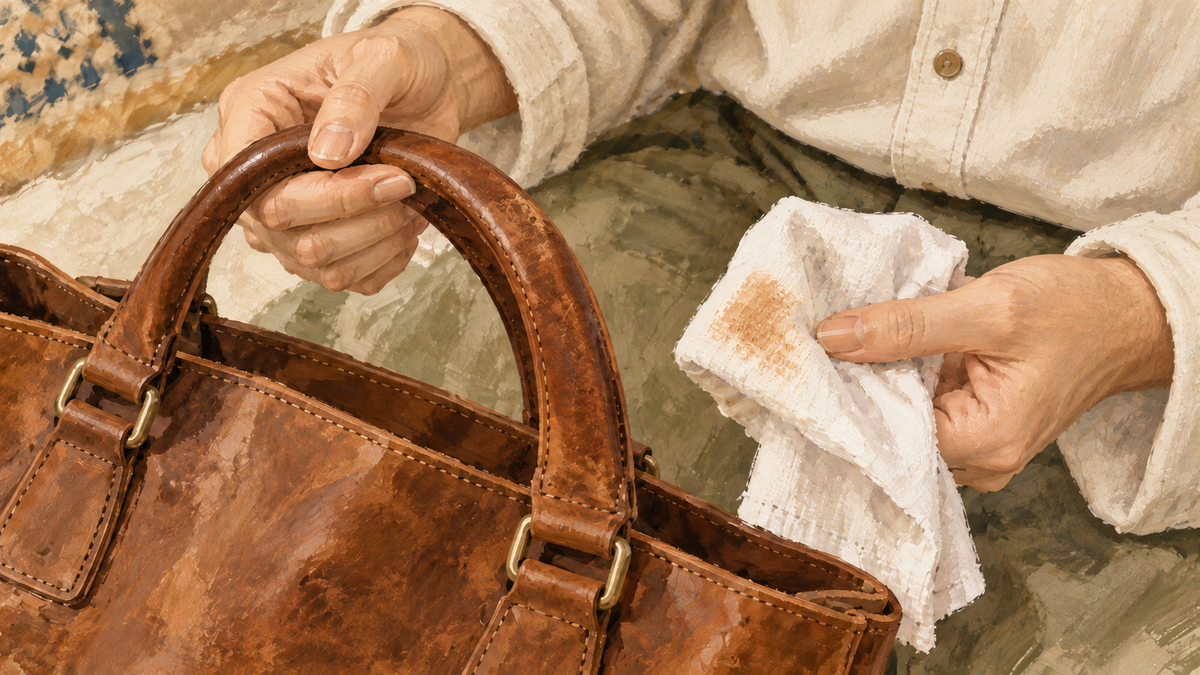
Colour Transfer from Bag Handles: What to Do for Hands and Sleeves, and How to Carry Comfortably
Colour on the hand that held your bag, or a faint mark on a white cuff. Because handles are touched so often, changes there can be especially noticeable.
First, dirt on the handle and colour coming off it are different issues. Rather than trying to wash everything away, identify what has marked which surface. That makes the next step clearer.
Separate a darkened handle from colour transferred to clothes
Sweat, skin oils and dust can collect where your hand grips. Colour on a hand or sleeve may involve dye or finish affected by contact, friction and moisture.
Don't decide the cause from appearance alone. Notice where you held it and what colour appeared where. Transfer from bag to clothes needs a different response from dark clothing marking a bag.

If colour is already on hands or sleeves
Set the bag down to stop contact. Don't use leather cleaner or strong solvents on colour left on your skin. For a marked sleeve, follow the garment's care label and a suitable treatment.
For a treasured garment or one that can't be washed at home, ask a cleaner and explain that colour came from the handle. Don't rush into repeated rubbing. A photograph of the current condition can help the discussion.
Adjust contact and the days you use it
A handle on your forearm touches your sleeve; held in your hand, it touches your palm. With pale clothes or on sweaty days, consider combinations that avoid prolonged contact.
Handle covers still leave questions of colour loss from the cover itself, moisture and uncovered areas. Don't leave one fitted while wet; remove it after getting home and check the condition. Straps and belts need the same thought about sweat and friction.

Care for the condition instead of scrubbing hard
Remove everyday dust with a soft, dry cloth. Blot moisture when wet, then dry in the shade without heat before storage. Avoid leaving handles pressed against pale fabric or a sofa.
Cleaners, creams and waterproofing sprays have different roles. Don't layer several in an attempt to stop transfer. Use small amounts suited to the material and finish. If a handle has deep cracks, tears or loose stitching, ask about repair before surface treatment.

Everyday and travel bags you'll enjoy holding
Feeling leather's character close up each time you grip a handle is part of owning a bag. Compare an everyday tote and a travel holdall according to belongings and carrying style.
A cowhide tote for everyday belongings

A cowhide bag measuring approximately 36 × 28 × 10 cm, with a zip closure and pockets inside and at the back. For carrying with everyday clothes beyond the working day. Notice how handles meet sleeves and enjoy combinations that feel comfortable.
A canvas holdall for packing a trip

A bag measuring approximately 53 × 23 × 30 cm and weighing around 1.1 kg, combining canvas with crazy horse leather. For trips when you'd like to enjoy both textures. After rain, give each material suitable care, including the leather handles, before letting it rest.
Common questions about handle colour transfer
Will repeated wiping stop the colour transfer?
Repeated hard wiping can damage colour and finish. If colour keeps coming off, ask the retailer about its condition rather than continuing increasingly forceful treatments.
Will a handle cover definitely prevent it?
It can reduce the area of direct contact, but isn't a complete solution. Consider colour loss from the cover itself and avoid leaving it fitted while damp.
You can enjoy both the sheen of a leather handle and the clean colours of favourite clothes. Review contact and a little care after use, then take your favourites out comfortably.
About the author

Yama (Cowmono Owner)
Yama has worked in sales and marketing at apparel companies in Japan and abroad, with a broad interest in fashion, sport, outdoor pursuits and subcultures.
