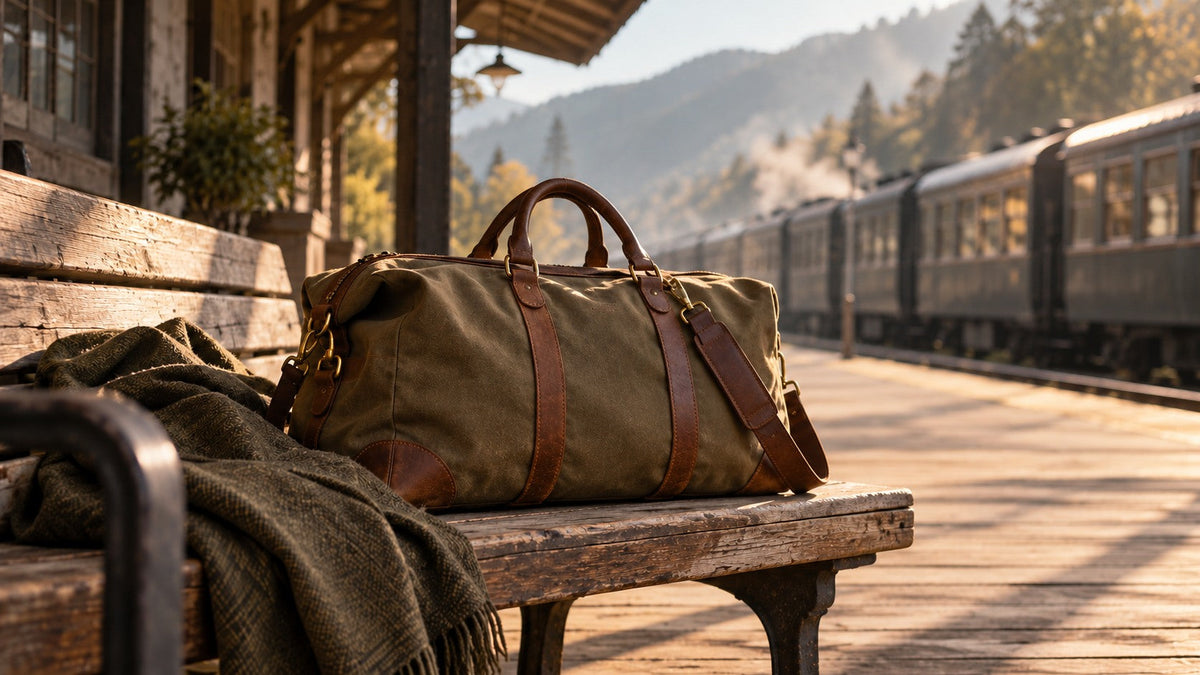
In your hand on the train, on your back in town: a day with a leather backpack
A backpack may be comfortable on the way to the station, but on the train you might hold it in front or carry it by hand. You do not keep it in the same position throughout your commute.
When choosing a backpack, picture not only how it looks on your back, but also what happens when you take it off. Small movements repeated every day are where differences in usability show.
Consider thickness with your belongings inside
Even a slim-looking backpack projects farther from your back when pouches and a bottle are stacked inside. Think beyond outer dimensions to the thickness with your usual belongings packed. If you hold it in front, consider whether you can do so without spreading your arms awkwardly.
On the train, follow the railway operator’s guidance and onboard instructions, and adjust how you carry it so it does not bump others. The right position changes between quiet and crowded conditions. Rather than assuming every position is safe, choose a weight and shape you can manage according to the situation.
Check the handle and where the straps go when you take it off
Taking it off your back, holding the top, then placing it on your lap or at your feet: check where you will grip it during those steps. Is there a handle? Is its shape easy to hold? Can you gather the straps so they do not trail on the floor or in the aisle? If product photos do not show this, check before buying.
A bag that is easy to handle empty can feel different once heavy belongings are added. Include times when you carry it one-handed on stairs or inside the train. If the bag’s own weight is available, add it to the contents when deciding. If no weight is listed, ask rather than assuming it is lightweight.
Do not bury frequently used items deep against your back
Keep your transit card or phone somewhere that does not require opening the main compartment widely at every gate. However, easy access and security are separate considerations. Put them in a closable space and pay attention to the state of your bag in crowds.
Once seated, put the bag on your lap and take out only what you need. Before getting off, close the zipper and check the seat and floor before standing. Using pockets to fit your routine makes the backpack easier to handle without filling every compartment.
A cowhide backpack with a cotton lining and listed dimensions of 38×26×6.5cm. It has an outer zip pocket and internal dividers. Check the thickness when packed, how to use the handle and any weight information you need before choosing.
A cowhide tote measuring 36×28×10cm with a zipper closure. Compare which style works better for your commute based on the amount you carry and where you will place it when seated.
Sizes and materials are based on the product pages. External dimensions differ from usable capacity. Please check each product page for the latest specifications and stock.
Wearing it, taking it off, carrying it by hand: all are part of your usual commute. Picture the moments when you move the bag and choose a shape you can live with comfortably every day.
About the author
Author: Yama (Cowmono Owner)
About: Experienced in sales and marketing at apparel companies in Japan and overseas, with a deep interest in fashion, sports, the outdoors and subcultures.